
Marrakech packs centuries of history into one walkable medina, and knowing which stops actually deserve your time makes the difference between a rushed day and a memorable one. This guide covers the top 10 things to do in Marrakech — the square that never sleeps, palaces with carved cedar ceilings, a cobalt-blue garden, and the souks where you’ll want to get pleasantly lost. Each entry below includes what to expect, how much time to set aside, and a practical note on reaching it, since several of the best Marrakech attractions sit just far enough from the medina to be easiest by private driver.
Whether you have one focused day or a full week, this list orders the essentials by area — medina landmarks first, then the gardens and museums a short drive away — so you can group nearby stops together rather than crisscross the city.
Marrakech Attractions at a Glance
Here’s what to expect from each stop before the full breakdown below.
| Attraction | Area | Time needed | Highlight |
|---|---|---|---|
| Jemaa el-Fna Square | Medina | 1-2h (more at night) | Food stalls, storytellers, snake charmers |
| Souks of the Medina | Medina | 2-3h | Leather, spices, lanterns, carpets |
| Koutoubia Mosque & Gardens | Medina edge | 20-30 min | City’s tallest minaret, free gardens |
| Bahia Palace | Medina | 45-60 min | 19th-century courtyards, carved cedar |
| El Badi Palace | Medina (Kasbah) | 30-45 min | Ruined 16th-century palace, storks |
| Saadian Tombs | Medina (Kasbah) | 20-30 min | Ornate royal necropolis |
| Ben Youssef Madrasa | Medina | 30-45 min | Former Quranic school, zellige tilework |
| Le Jardin Secret | Medina | 30-45 min | Restored riad garden, quiet break |
| Jardin Majorelle & YSL Museum | Gueliz | 1-1.5h | Cobalt-blue villa, cactus garden |
| Menara Gardens | West of medina | 30-45 min | Reflecting pool, Atlas Mountain views |
1. Jemaa el-Fna Square
No list of things to do in Marrakech starts anywhere else. By day, Jemaa el-Fna is a wide, sun-baked square lined with orange-juice carts and henna artists; by early evening it transforms into an open-air theater — food stalls fire up, drummers gather a crowd, and storytellers hold court the way they have for centuries. UNESCO recognized it as a Masterpiece of the Oral and Intangible Heritage of Humanity, and it’s easy to see why once you’ve watched it come alive.
Grab a rooftop café table around sunset for the best view before wading in on foot. It’s free to walk through at any hour, and it sits right at the edge of the medina, so most riads and hotels are within a short walk.
2. The Souks of the Medina
North of Jemaa el-Fna, the souks unfold as a maze of covered lanes organized loosely by craft — leather in one stretch, spices and dried fruit in another, lanterns, carpets, and babouche slippers further in. Getting a little lost is part of the experience, though it helps to have a rough direction in mind, since most lanes eventually lead back toward the square or the Ben Youssef Madrasa.
Prices are rarely fixed, so gentle negotiation is expected and part of the culture rather than a hassle to avoid. Go slowly, handle the goods, and don’t feel pressured to buy at the first stall — the same items usually show up a few shops later at a better price.
3. Koutoubia Mosque & Gardens
Marrakech’s skyline is defined by the Koutoubia Mosque’s 12th-century minaret, visible from almost anywhere in the medina. Like all active mosques in Morocco, the interior is reserved for Muslim worshippers, but the surrounding gardens and the building’s exterior — with intricate stonework and proportions that inspired other landmarks across the region — are open to everyone and free to visit.
It’s a pleasant, shaded stop to catch your breath between the square and the souks, and the call to prayer echoing off the minaret at dusk is one of the city’s defining sounds.
4. Bahia Palace
Built in the late 19th century for a grand vizier, Bahia Palace — “brilliance” in Arabic — is a maze of courtyards, carved cedar ceilings, and zellige tilework that took years to complete. Several rooms once belonged to the vizier’s wives, each decorated differently, and the central courtyard’s scale alone is worth the visit.
It’s one of the more polished, well-preserved interiors in the medina, so plan for photo stops — the light through the carved wooden screens changes constantly through the day.
5. El Badi Palace
Where Bahia Palace is intact, El Badi Palace is atmospheric ruin — a 16th-century royal residence stripped of its marble and gold centuries ago, leaving sunken gardens, towering walls, and a resident colony of storks nesting on the ramparts. Climb the walls for a rooftop view over the medina and the Atlas Mountains on a clear day.
It’s quieter than Bahia Palace and pairs naturally with a stop at the nearby Saadian Tombs, both tucked into the same corner of the Kasbah district.
6. Saadian Tombs
Hidden behind the Kasbah Mosque and rediscovered only in 1917, the Saadian Tombs hold the 16th-century royal necropolis of the Saadi dynasty, including the Chamber of the Twelve Columns — a small room of Italian marble and gold leaf that ranks among the medina’s most ornate interiors.
Because the site is compact, expect a short queue at busy times of day; arriving early in the morning avoids the longest waits.
7. Ben Youssef Madrasa
Once North Africa’s largest Quranic school, Ben Youssef Madrasa reopened in recent years after an extensive restoration. Its central courtyard — ringed by carved cedar, stucco, and zellige tilework — housed hundreds of students at its peak, and the upper-floor student cells give a real sense of scale.
It’s a short walk from the souks and one of the best examples of Moroccan-Andalusian architecture open to non-Muslim visitors.
8. Le Jardin Secret
Tucked behind an unmarked door in the medina, Le Jardin Secret is a restored 19th-century riad with two gardens — one formal and Islamic in style, one exotic and looser — plus a small museum on Marrakech’s historic water systems. It’s one of the quietest stops on this list.
The rooftop café makes a good place to sit down between souk stretches, and it’s easy to combine with Ben Youssef Madrasa on the same walk.
9. Jardin Majorelle & YSL Museum
A cobalt-blue villa surrounded by bamboo groves, cactus collections, and lily-covered pools, Jardin Majorelle was the former home of painter Jacques Majorelle and later Yves Saint Laurent, whose ashes were scattered in the garden. The adjoining Yves Saint Laurent Museum covers his work and his long relationship with Morocco.
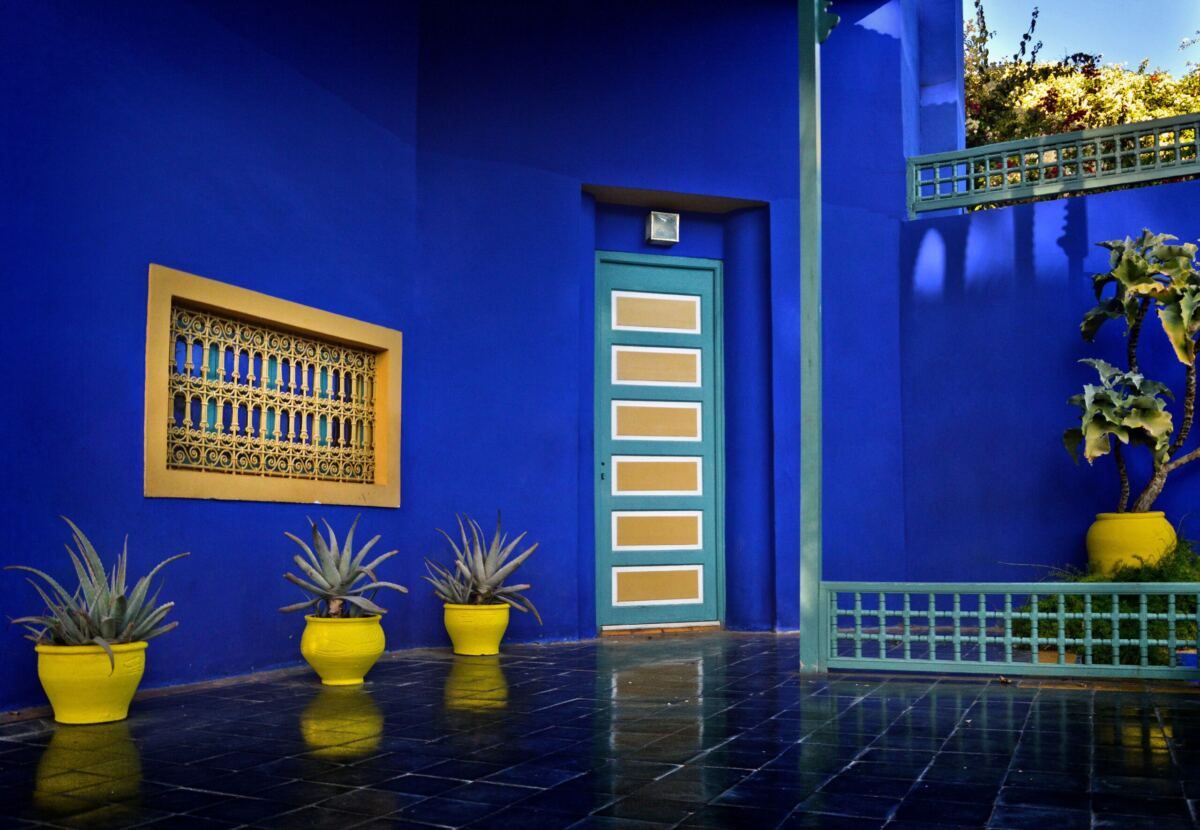
It sits in Gueliz, the newer part of the city, about 20 minutes from the medina — close enough for a private driver to fold it into the same day as the souks and palaces without wasting the drive on a taxi hunt. Book tickets online in advance, since it’s one of the most visited attractions in the city.
10. Menara Gardens
West of the medina, Menara Gardens center on a large reflecting pool with a 19th-century pavilion and the Atlas Mountains as a backdrop on clear days — one of the most photographed views in Marrakech. The olive groves surrounding the pool date back centuries and are still in use.
Menara sits on the road toward Marrakech Menara Airport, which makes it an easy stop to fold into an arrival or departure transfer rather than a special trip on its own.
Beyond the Medina: Day Trips from Marrakech
You’ve now covered the top 10 things to do in Marrakech within the medina walls. The city’s location also makes it a natural base for exploring further afield — the Ourika Valley’s waterfalls, the Agafay Desert just outside town, the Atlantic coast at Essaouira, or the High Atlas villages around Imlil are all within a two-to-three-hour drive. Our guide to the best day trips from Marrakech breaks down distance, drive time, and fixed private-transfer prices for each one, so you can decide how far you want to go before booking anything.
Practical Tips for Visiting Marrakech’s Attractions
Most sites in the medina open daily, though hours shift on Fridays around midday prayer, and a few close one day a week — check ahead if a specific palace or museum is the main reason for your trip. Modest dress (shoulders and knees covered) is appreciated at religious and historic sites, even where the interior itself is off-limits. Buying tickets online in advance for Jardin Majorelle avoids the longest queues, especially in peak season (spring and autumn).
In the souks and around the main sites, you may be offered unofficial “guide” services — a polite, firm decline works fine if you’d rather explore independently, and none of the attractions on this list require a guide to visit. If you’re wondering more broadly about safety and common scams before your trip, our guide to visiting Marrakech safely covers what’s worth knowing.
Because several of the best Marrakech attractions — Jardin Majorelle, Menara Gardens — sit outside easy walking distance from the medina, a private driver for the day covers the ground without the back-and-forth of hailing taxis between stops. It’s also the simplest way to fit day trips or an airport transfer around your sightseeing without juggling separate bookings.
Frequently Asked Questions
What are the top things to do in Marrakech?
The essentials are Jemaa el-Fna Square, the medina souks, Koutoubia Mosque, Bahia Palace, El Badi Palace, the Saadian Tombs, Ben Youssef Madrasa, Le Jardin Secret, Jardin Majorelle, and Menara Gardens — all covered in detail above, roughly in the order you’d visit them from the medina outward.
How many days do you need to see the main Marrakech attractions?
Two to three full days covers the list above comfortably, with the medina sites fitting into one or two days and Jardin Majorelle and Menara Gardens making a natural half-day outside the walls. Add extra days if you’re combining Marrakech with a day trip to Ourika, Essaouira, or the Atlas Mountains.
Is Jardin Majorelle worth visiting?
Yes — it’s one of the most consistently recommended Marrakech attractions, and the combination of cobalt-blue architecture, a cactus garden, and the Yves Saint Laurent connection makes it distinct from the medina’s historic sites. Book tickets online in advance, since it’s also one of the most visited stops in the city.
Can you visit Marrakech’s attractions on foot?
Most of the medina sites — Jemaa el-Fna, the souks, Bahia Palace, El Badi Palace, the Saadian Tombs, Ben Youssef Madrasa, and Le Jardin Secret — are within comfortable walking distance of each other. Jardin Majorelle and Menara Gardens sit outside the medina and are easier by taxi or private driver, especially in the heat of the day.
What is the best time of day to visit Jemaa el-Fna?
Late afternoon into evening is when the square is at its most alive, as food stalls and performers set up before dusk. Morning visits are quieter and better for photos of the square itself without the crowds.
Do you need a guide to visit the Marrakech souks?
No — the souks are open to walk through independently, and none of the attractions on this list require a guide to enter. If you’d rather have a local point things out, official guides can be arranged through most riads and hotels.
Are Marrakech’s attractions open every day?
Most are, though hours can shift around midday on Fridays for prayer, and a few sites close one day a week. If a specific palace or garden is central to your plans, it’s worth confirming its current hours a day or two ahead.
With the medina’s landmarks, a cobalt-blue garden, and the Atlas Mountains on the horizon, Marrakech rewards travelers who pace themselves rather than rush the list. Ready to plan the logistics around your sightseeing?


